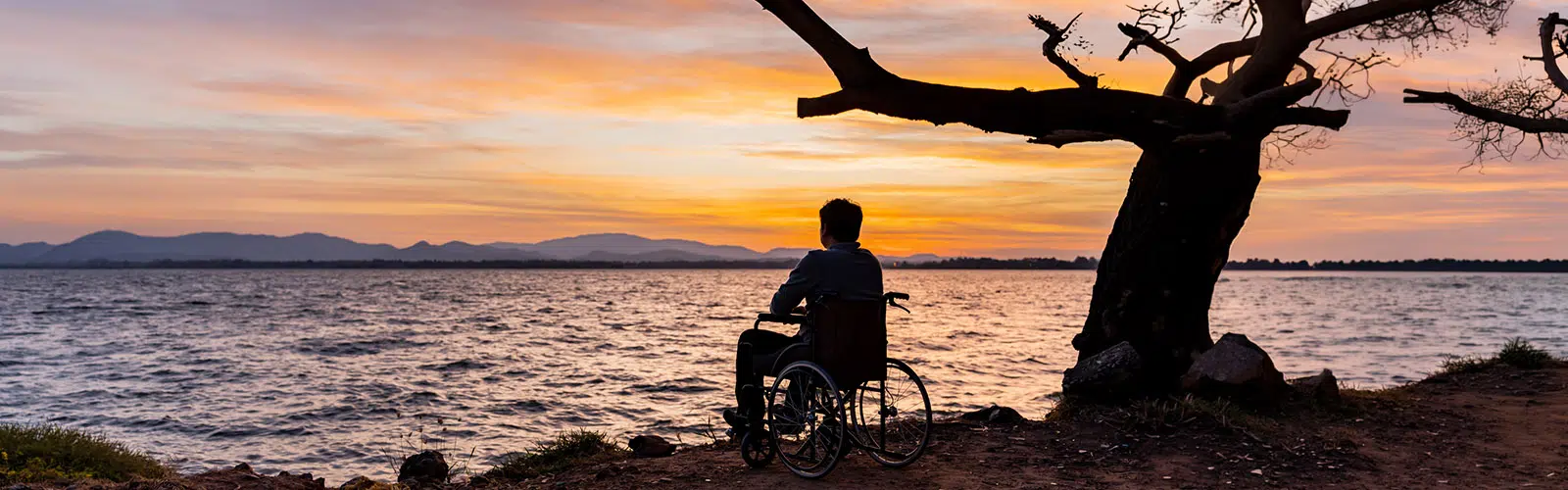
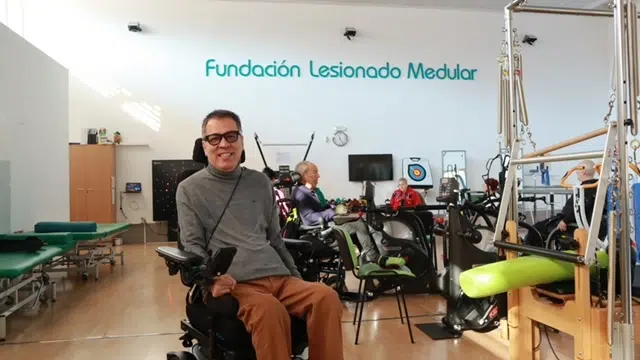
Born in Madrid, but of Japanese descent on his father’s side, Ken Mizukubo Tarifa has been involved with Fundación del Lesionado Medular since 1997—its very beginning. A graduate in Art History from the Complutense University of Madrid, his life changed after a car accident that left him in a wheelchair. That experience, of course, reshaped his life, but it affected only his physical mobility—not his mindset.
From the outset, he was clear that one of the goals of this new stage in his life would be to help others in similar situations to move forward. Completing a Master’s degree in Universal Accessibility and Design for All at La Salle University helped him achieve that goal. But above all, it was the creation of this foundation—recently recognized with the Mapfre Inclusión Responsable Award, which honors organizations demonstrating an outstanding commitment to disability—that made the difference.
What does receiving this award mean for your foundation?
Above all, this recognition is a public validation of nearly three decades of consistent work alongside people with spinal cord injuries. We don’t see it as an award for an organization, but as recognition of a way of doing things: always placing the person at the center, supporting their autonomy, and supporting them throughout their life journey.
Receiving this from an organization like Mapfre also reinforces a key idea: responsible inclusion is a shared responsibility between the nonprofit sector, businesses, and society as a whole. For us, it’s an incentive to keep growing and to take on new challenges with an even greater sense of responsibility.
Let’s start at the beginning—how did the idea to create the foundation come about? How many people do you currently support?
Fundación del Lesionado Medular was established in 1997 by a group of people with spinal cord injuries who identified a clear gap: there was a lack of specialized resources addressing spinal cord injuries from a comprehensive, long-term perspective.
Since then, we’ve supported thousands of people throughout their entire life journey—from the early stages after injury, once the hospital phase is over, through to adulthood.
Each week, we provide care to around 300 people at our neurorehabilitation center. We also operate a day center with 30 subsidized places, a specialized residential facility with 74 places, an early care center, as well as specialized consultations and competitive sports teams.Each year, we support hundreds of people with spinal cord injuries and their families. Our journey reflects that of an organization that has continued to grow by listening, learning, and constantly adapting to new social and healthcare realities.
Ultimately, what is the foundation’s goal?
Our goal is clear: to improve the quality of life and autonomy of people with spinal cord injuries, supporting their full social inclusion. To achieve this, we offer a comprehensive care model that brings together residential services, specialized rehabilitation, a day center, psychological support, specialist consultations, adapted sports, and leisure activities.
We don’t just treat an injury—we support the person across every dimension of their life, respecting their personal goals and encouraging their active participation in society.
One of your strengths is rehabilitation, delivered by specialists in spinal cord injuries. Why is this so important?
That’s right. We have a highly specialized team focused on spinal cord injuries, which allows us to provide targeted, ongoing care tailored to each individual. Experience and specialization, combined with innovative, state-of-the-art equipment unique in Spain, are key in this field, as we’re dealing with complex conditions that require a very specific approach.
Our rehabilitation goes beyond the physical aspect; it’s part of a broader process aimed at supporting both functional and personal independence.
Such comprehensive and complex services require funding. How are you financed?
Our funding model is mixed. We receive support from public administrations, private partnerships, foundations, companies, and individual donations. This approach allows us to remain independent while ensuring the sustainability of highly specialized services.
Every resource we receive translates directly into care, innovation, and improvements in the quality of life of the people we support.
“Responsible inclusion is a shared responsibility between the nonprofit sector, companies, and society as a whole. For us, receiving this award from Mapfre is an incentive to keep growing and to take on new challenges with an even greater sense of responsibility.”
What are the most common causes of the spinal cord injuries you treat (traffic accidents, swimming pool/beach accidents, congenital conditions)?
We support people with spinal cord injuries resulting from a wide range of causes. In some cases, the injury results from trauma—such as a traffic accident, a fall, or a sports injury—while in others it has a non-traumatic origin, linked to conditions such as tumors, infections, multiple sclerosis, congenital causes like spina bifida, or vascular and degenerative disorders.
In adulthood, traumatic causes remain the most common, particularly falls and traffic accidents. This is a reminder that spinal cord injuries can occur at any point in life—and that prevention and awareness remain essential.
I imagine that people with spinal cord injuries are still underserved and often have to turn to private services or nonprofit organizations to access specialized care.
Despite progress, the reality is that many people with spinal cord injuries still face significant gaps in access to specialized care, particularly in long-term treatment processes. In many cases, this means turning to private resources or the nonprofit sector to continue essential treatment.
Foundations and associations don’t replace the public system, but they do complement it and help address needs that are still not adequately covered.
You also provide psychological support for families. It’s essential to care for caregivers as well, right?
Absolutely. A spinal cord injury does not affect only the person living with it, but their entire environment. Families and caregivers go through very intense emotional processes and, if they are not supported, the strain can be enormous.
Caring for the caregiver is a way of better caring for the person with a spinal cord injury and of ensuring healthier, more sustainable family environments over time.