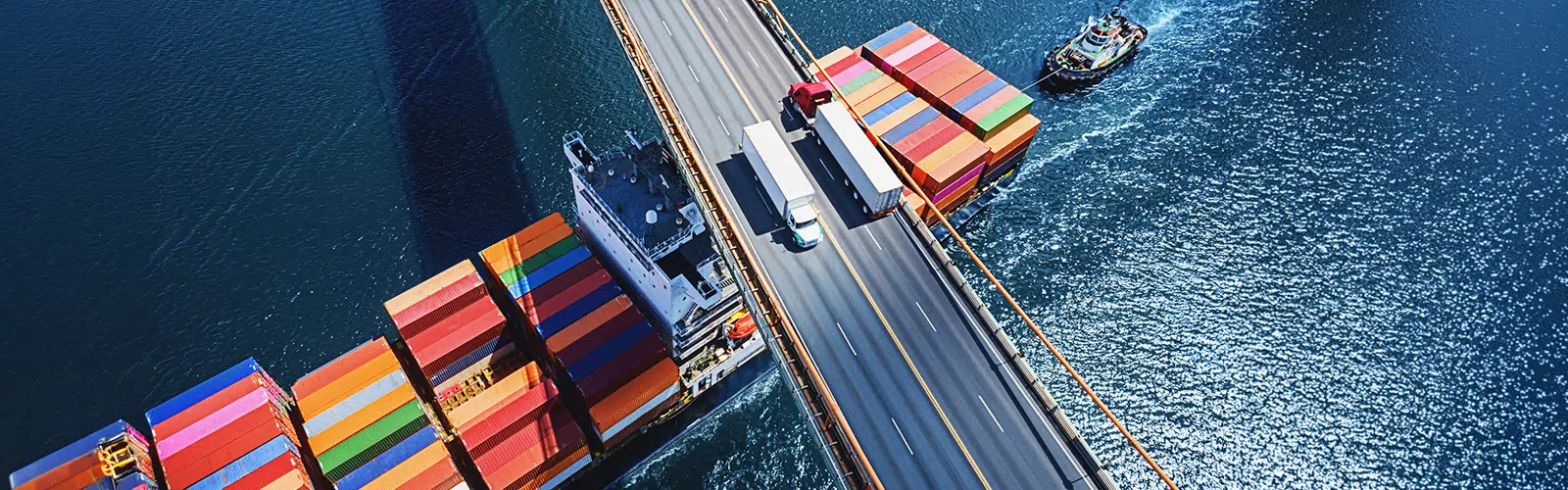
Transport moves the world, especially by sea. More than 80% of international trade is conducted through this channel, and any disruption directly impacts prices, deadlines, and availability. Recent analyses, such as the one prepared by Solunion (an insurance company specializing in credit and surety insurance, in which Mapfre holds a 50% stake), emphasize that the combination of geopolitical conflicts, changes in trade routes, and pressure on the supply chain are three of the factors that will shape the evolution of this activity in the coming years, which highlights the need for protection.
The global insurance market of the line reveals significant figures. The International Union of Marine Insurance (IUMI) shows that premium revenue worldwide exceeds tens of billions of dollars per year, with moderate growth in recent years and an improvement in loss ratios. The data clearly illustrate the economic dimension of the risk covered by the policies. This contrasts with the situation in Latin America. In most countries in the region, cargo insurance is often not mandatory. However, it is highly recommended to take out such insurance to protect the investment.
These policies are not a novelty either, as practices of cargo insurance are attested in the commercial routes of the Middle Ages, consolidated with documents between the 14th and 17th century, when the large shipping companies promoted the professionalization of the line of business. Over time, this concept expanded to cover land and air.
Different types of policies
Today, these insurance policies cover the damages that occur to goods during transport, from the origin to the destination—including loading and unloading maneuvers—regardless of the mode of transport: land, sea, and air, and anywhere in the world.
Insurance companies also have different modalities: for one or multiple shipments. Thus, there are insurance policies for a specific period, usually one year, for continuous and large shipments, or the option to subscribe to travel coverage for smaller or irregular shipments.
Regarding the risks, these policies typically cover damage to the cargo due to fire, lightning, explosion, collision, overturning, derailment of trains, falling of aircraft, stranding, sinking, or collision of the ship, as well as the loss of packages that fall during the loading, shipment, or unloading operations.
In addition to the above, there are also complementary coverages that can be added, such as delays and protection against strikes or armed conflicts, among other examples.
Benefits for companies and international trade
Purchasing cargo insurance guarantees security and peace of mind for companies. A covered loss prevents an isolated incident from causing a deterioration in the company’s balance sheet—or, in the worst-case scenario, from driving it into bankruptcy—thereby mitigating financial risk. Insurance not only allows the risk to be isolated, but also helps maintain operational continuity.
It also facilitates access to credit and logistics, as banks and financial institutions often require insurance coverage for goods in transit as a condition for advancing payments or granting trade finance. For their part, carriers and logistics operators value insured customers because they reduce the level of risk. The strategic benefits are clear, as detailed in the analysis by the consulting firm MarketResearchFuture (MRFR).
All of this results in greater stability of international trade. A solid cargo insurance market helps companies take on commercial risks, expanding routes and volumes, while also supporting the growth of commercial activity worldwide.
Challenges and recommendations
Current events have a direct impact on cargo insurance. Therefore, it is important to consider some of the most prominent challenges and trends. A clear example of this is geopolitical risks and conflict scenarios. Insurance coverage is being adapted to respond to the increased tensions along various shipping routes.
Another challenge is climate change and extreme events, which increase both the frequency and severity of claims, as noted in the report The Maritime Transport Sector (July 2024) by Solunion. On the other hand, there are highly positive factors, such as digitalization and traceability. Improved cargo tracking and digital platforms allow for greater control while also enabling the integration of more flexible insurance solutions.
To obtain the most appropriate insurance, it is essential to understand the risk and tailor the policy, as not all goods require the same coverage. As always, attention should be paid to prevention through proper packaging and careful route planning, among other measures, to reduce the likelihood of claims.
Support of a specialized company
Ultimately, in a world where supply chains are becoming increasingly complex and global, cargo insurance remains a key pillar for trade. That is why it is vital to have the support of a specialized insurance company.
MAPFRE has extensive experience in this sector and advises the customer on the most suitable policy to protect goods during transport. In turn, its insurance policies contribute to stabilizing trade flows, enabling companies to operate with greater security, and facilitating easier access to financing for their operations.