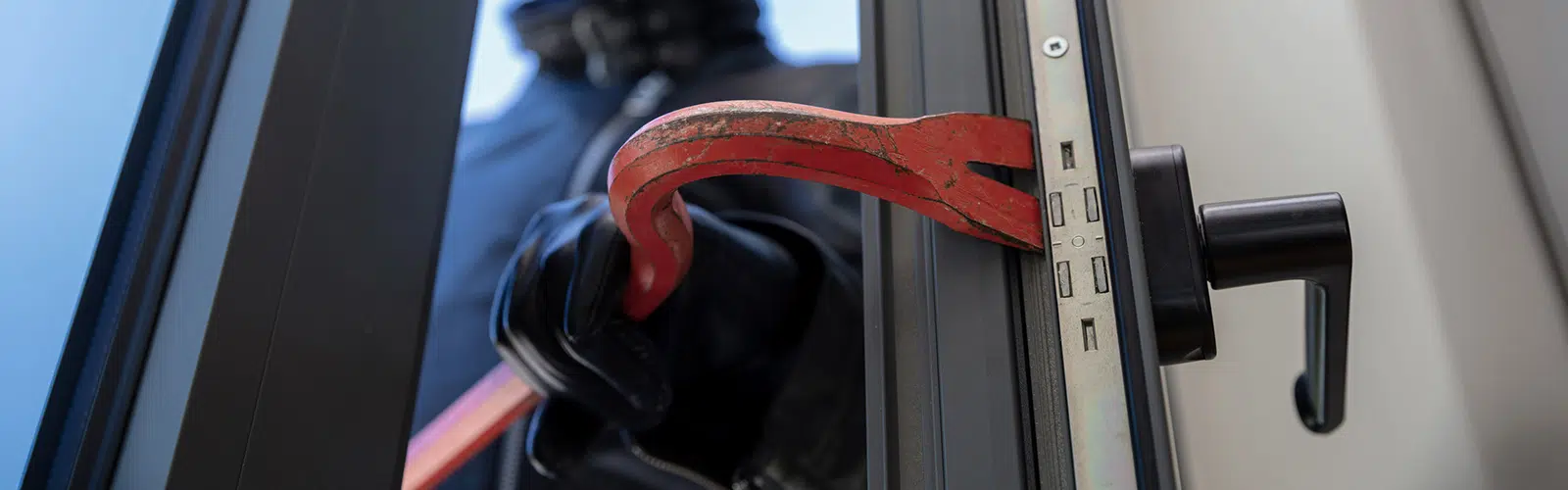
The possibility of a home burglary or being mugged while out and about ranks among the threats that worry families most, although perceptions of risk vary depending on where they live.
Recent studies, such as the one conducted by Verisure Observatory, show that while home break-ins are a greater concern in Europe, people in Latin America are more worried about theft outside the home, where concerns about street crime are twice as high as in the Old Continent.
Ultimately, no matter where you live, security is an increasingly important concern shared by millions of people. In this context, having theft coverage as part of your home insurance can provide valuable peace of mind. However, not all incidents are covered in the same way. To avoid surprises, it’s essential to understand what your policy does and doesn’t cover. Let’s break it down in simple terms!
The difference between robbery and theft
Although we often use these words interchangeably in everyday conversation, insurance companies draw a major distinction between them. And this matters, because it can determine whether you’re eligible for compensation for your losses.
Robbery is covered by most home insurance policies. It involves the use of force, violence, or intimidation. For example, someone might break your door lock to get into your home or threaten you with a weapon in the street to steal your bag.
In theft, on the other hand, the property is taken through carelessness, that is, if you leave your home door open and someone enters, or if someone takes your wallet from your backpack without you noticing. Because these incidents don’t involve force or violence, insurance policies often impose limits on coverage or exclude them altogether.
Protection inside and outside the home
With the above clear, if you suffer a robbery in your home, you should know that the policy divides the protection into two parts: building and contents. In the first case, the insurance company covers the repair of the material damage caused by the thieves, such as destroyed doors, broken windows, or walls damaged as a result of the robbery.
Contents coverage, on the other hand, will compensate you for the value of the furniture, appliances, technology, or clothing that has been taken, according to the limits stated in your policy.
Be careful with your most valuable belongings! Cash, works of art, and valuable jewelry usually require a specific declaration or an additional clause to be 100% covered. Our recommendation is to review your policy from time to time and keep your inventory of belongings up to date. Better safe than sorry!
Many people don’t know this, but your home insurance also protects you in the event of a robbery when you leave your home, under certain conditions. For example, if you are robbed and threatened on the street, it usually covers the value of the items you are carrying (mobile phone, wallet, watch) up to the limit set out in the policy’s specific terms. Also, if your credit cards are stolen and purchases are made with them before you have time to cancel them, many policies cover those charges.
What is usually excluded from the coverage?
It is just as important to know what is not covered. This includes cases of negligence, such as leaving the keys in the lock on the outside of the door or leaving the windows of a ground-floor apartment open when you leave.
Cars and motorcycles parked in the garage are also not covered by home insurance, as they must be covered by their own auto insurance policy.
Likewise, if you leave your phone on a café table and someone takes it while you look away, the insurance company will deny the claim if theft without force is not included in your policy.
Quick guide: what to do if you are robbed
If, despite everything, you go through this difficult experience, stay calm and follow these steps:
- If you arrive home and suspect the thieves are still inside, do not enter. Call emergency services immediately.
- Report the incident to the authorities as soon as possible. A copy of the police report is the mandatory legal document your insurance company will ask you for.
- Don’t touch anything. Keep the scene intact. This will help both the police investigation and the insurance appraisal.
- Look for invoices, extracts from the bank, or old photos that prove the stolen items were yours.
- If you haven’t done so already, notify your insurance company. There is usually a legal deadline to submit all the documentation to your insurance company.
Mapfre’s response
Having a home insurance policy with Mapfre guarantees the support of a company with a solid assistance network.
In moments of such vulnerability, like a robbery, the insurance company’s responsiveness and commitment to customer service make a difference. It sends professionals (locksmiths and glaziers) to secure your home if it has been left unprotected by a forced door or a broken window.
Customer service will guide you step by step through the claims process, helping you handle the paperwork and police report clearly and without excessive bureaucracy. Thanks also to a broad network of local loss adjusters and digitized processes, the company speeds up the assessment of damage and stolen belongings, accelerating the payment of compensation.
Ultimately, with Mapfre you have comprehensive coverage and efficient support in the event of a robbery, helping you regain peace of mind quickly.