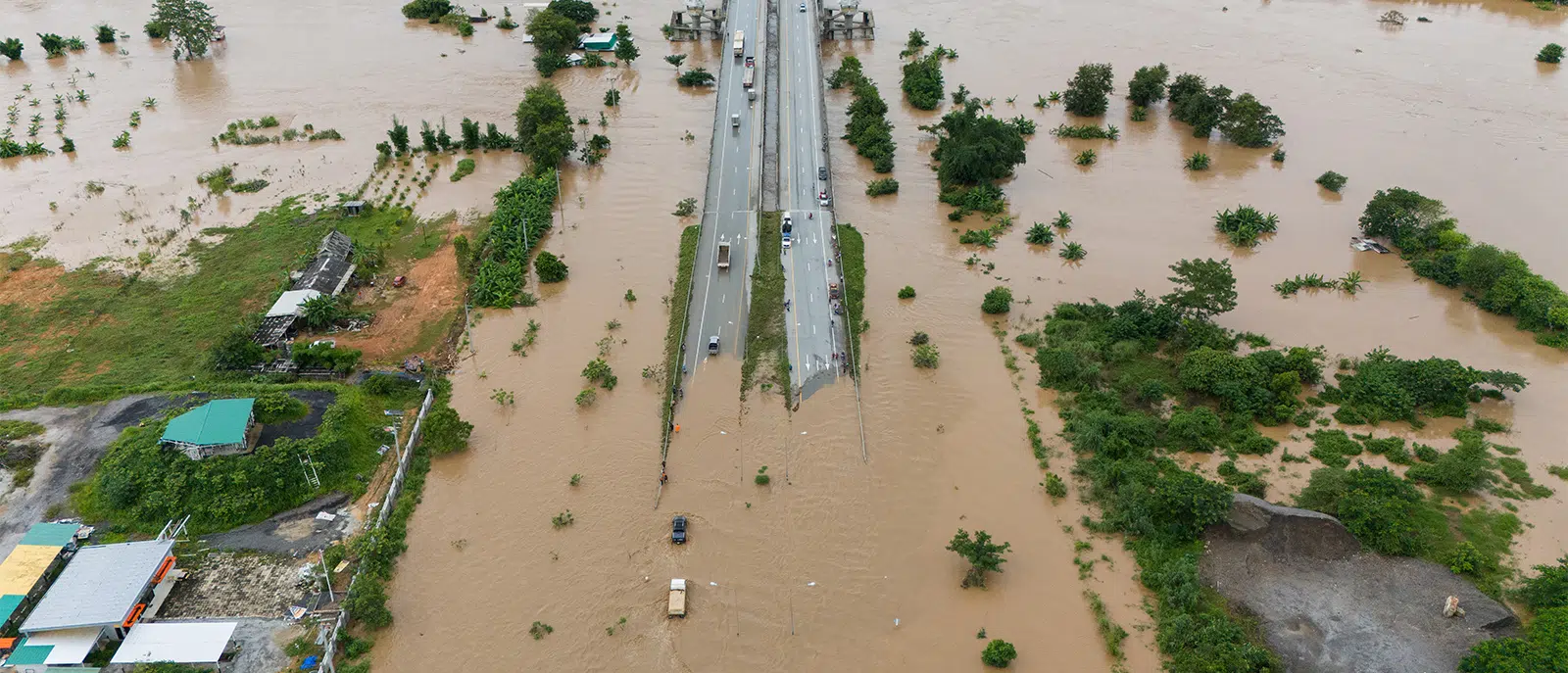
Over the past 50 years, four in ten people in the region have been affected by tropical storms, hurricanes, flooding, droughts, heat waves, or wildfires. The region has experienced an average of one natural disaster a week, with nearly 100,000 lives lost and economic losses exceeding 360 billion dollars. The figures come from Toward an Ibero-American Strategy for Responding to Natural Disasters: Resilience, Insurance, and Public-Private Partnerships, a report produced by Fundación Iberoamericana Empresarial (FIE) in collaboration with Mapfre and CAF—Development Bank of Latin America and the Caribbean.
Prevention measures, early warning systems, and emergency response efforts are helping save more lives and reduce damage. The region has made considerable progress in disaster prevention, civil protection, and early warning systems, alongside growing awareness of the need to prepare for these risks. That’s the view of Manuel Balmaseda, an economist, financial analyst, and one of the report’s authors. He stresses, however, that a disaster’s impact doesn’t end when the immediate emergency is over. Its consequences can last for years, affecting families, slowing economic activity, and holding back countries’ development.
“Households, businesses, and ultimately society as a whole pay the price for these disasters. Families lose assets and income, businesses face damage and disruptions, and governments have to find extra resources. Citizens also foot the bill for public spending through taxes, higher debt, or cuts to other services and investments. The challenge now is to build on this progress by making disaster risk a routine part of fiscal, land-use, and financial planning. If disasters keep happening, we need standing arrangements to deal with them,” he says.
Contingency funds, insurance, and partnerships
Experts agree that one of the region’s biggest challenges is to become better prepared financially for disasters. Having funding in place before disaster strikes means money is available right away, helping communities recover faster. Some of the most effective tools include contingency funds, catastrophe bonds, emergency credit lines, insurance, and public-private partnerships. Insurance has a key role to play. It helps people repair their homes and get their businesses back up and running, while giving families, businesses, and governments financial stability when they need it most. Without these tools, much of the recovery bill falls on those affected and on public budgets.
10 key measures
The Ibero-American Strategy for Responding to Natural Disasters sets out steps to narrow the protection gap (which stands at 81% in the region), encourage public-private partnerships, make insurance more widely available, and improve access to funding when disasters strike.
Fundación Iberoamericana Empresarial (FIE) has submitted the report to the Ibero-American General Secretariat (SEGIB) for discussion at the 30th Ibero-American Summit of Heads of State and Government, to be held in Madrid on November 4–5, 2026. If the summit adopts these proposals, how will we know five years from now whether they’ve worked?
“Setting up an Ibero-American Network for Disaster Risk Reduction could be a first step. But the clearest sign of success would be a steadily shrinking protection gap, with more households, businesses, and critical infrastructure covered, faster payouts, and less pressure on public finances. The main goal is to help households and businesses get back on their feet sooner and prevent a disaster from turning into a prolonged economic and social crisis,” says Manuel Balmaseda, who stresses that financial resilience is no longer optional—it’s essential to sustainable development across Ibero-America.