
Why is it time to reclaim humanism as a business priority?
Because it makes sense. Companies are communities of people and like every community, we want to continue existing. We want to do it without losing sight of the customer and with the conviction that respect for people – whether they’re customers, colleagues, providers – dignifies us as companies and as individuals.
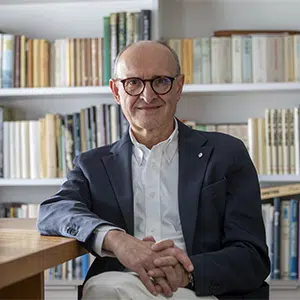
Humanism is often presented as something incompatible with the demand for results. However, the slogan of your project is ‘More human, more competitive’. Why do you believe that both dimensions are not only compatible but also mutually reinforcing?
Because humanism doesn’t mean being a do-gooder. Humanism is about defending balance on the back of good results. Not thinking about the results part leads us down the path to very flowery and inconsistent narratives.
The project involves very different organizations, from private companies like Mapfre to public organizations. What do they have in common?
They share the commitment to exploring a management model that combines profitability and humanity, and how to transpose that to everyday reality, to how things are decided or promoted, how we are with our customers, whoever they are, and how we contribute to society.
The book includes 13 business cases that illustrate different forms of humanist leadership. What lessons would you highlight?
I’d zoom in on the reality that managing enterprises in a balanced manner is both possible and more sustainable. We all want to be profitable and want to meet our targets, but we also want to grow building something worthwhile.
Mapfre is one of the cases you include, based on how the company responded to the terrible flash floods in Valencia in southern Spain in October of 2024. What elements of that activity seem to you representative of what it means to lead from humanism?
Generosity. Mapfre gave us all a lesson in generosity, and one that improved the company’s business positioning. And it did so because the response was authentic and flowed from its purpose. When there’s no authenticity, mediocrity fills the vacuum.
The ultimate proof of an organization’s values can be seen in how it responds to a crisis. What do you think distinguishes a company that acts from authenticity?
Crises are the true test of consistency. That’s when we find out if we can really look ourselves in the mirror. It’s when consistent leaders emerge, people who make decisions in complex situations, with fear, with doubt, but they forge ahead, because their way of serving the company is deciding the way forward in scenarios of uncertainty.
What quality do you consider most important in the leaders who will succeed in the next decade?
There can only be two reasonable obsessions in any company: the customer and honesty. I believe that the people who have impressed me the most have known how to combine both. Without customers, we don’t exist; without honesty, we diminish ourselves to the point of tearing ourselves apart.
Many organizations compete today to attract talent. What do you think people are looking for in an employer today?
They want to earn a living in a way that allows them to grow as individuals and as professionals. Some people become smaller as they face a problem, and others grow. You have to try to grow without ever stopping learning.
There’s a lot of talk about AI, automation, and productivity. What capabilities do you think will take on greater differential value?
The ability to think, to ask ourselves the right questions and to make good decisions. AI is here to give us the time to think much more, not less. And thinking involves concentrating. If you don’t concentrate, your thinking is weak and the machine beats you by a landslide.
If you could change one thing about the current business culture, what would it be?
Fear. A leader isn’t there to instill fear, but to convey psychological security. The good leader is the one who brings out the best in others, not the one who expects others to adore and serve them. We need companies with less fear and more ability to grow by helping others grow.
What worries you the most and what excites you the most about the future of organizations?
People. Let’s create an equation between technology and people, leaning in favor of people. It seems impossible right now, but we are going to make it happen. The opposite would be the most colossally stupid outcome. It’s people who make the difference when it comes to ensuring technology is democratic and reaches everyone.
Looking back, what’s the most valuable lesson you’ve learnt?
It’s that we’re not going to take anything with us when we go. Hopefully we’ll have earned a decent salary, with good benefits, but we won’t take anything with us, except the good we’ve done for others. When I talk with entrepreneurs, they talk to me about people more than they do about the years when things went well. We have to think about legacy, which gives real meaning to our agendas.
Is there any idea about management or leadership that you defended 20 years ago and that you see differently today?
Many. I’ve made mistakes as a businessman and as a professional, but what has saved me is thinking for myself, gradually freeing myself from management fads.
In your books, you often advocate for the importance of passion, curiosity, and intelligent ambition. What role have these three elements played in your own professional career?
Absolutely everything. Nothing happens without passion. Without compassion, we are nothing. Wise people are those who passionately combine ambition and humility. My father gave me a phrase that I’ll never forget: “Be nice to people on your way up, because you’ll meet them on your way down.” In a word, humility.