
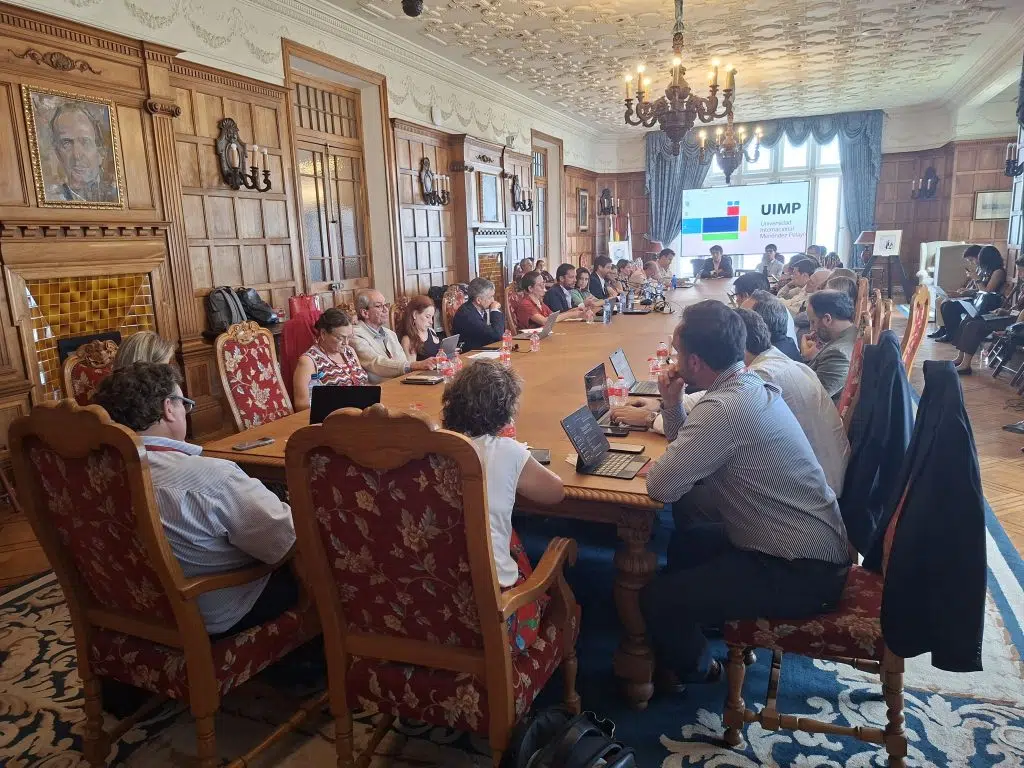
Mapfre, Latin America’s largest multinational insurance company, took part in the 11th Multilatinas Companies Forum, a gathering dedicated to discussing the economic outlook for Ibero-America and the role of the private sector. The event was held at the Menéndez Pelayo International University (UIMP) in Santander.

Over the course of three days, the event featured representatives of large companies, public administrations, and international organizations (such as the IDB or CAF), organized by the Ibero-American Business Foundation and held on the eve of the upcoming Ibero-American Summit in Madrid.
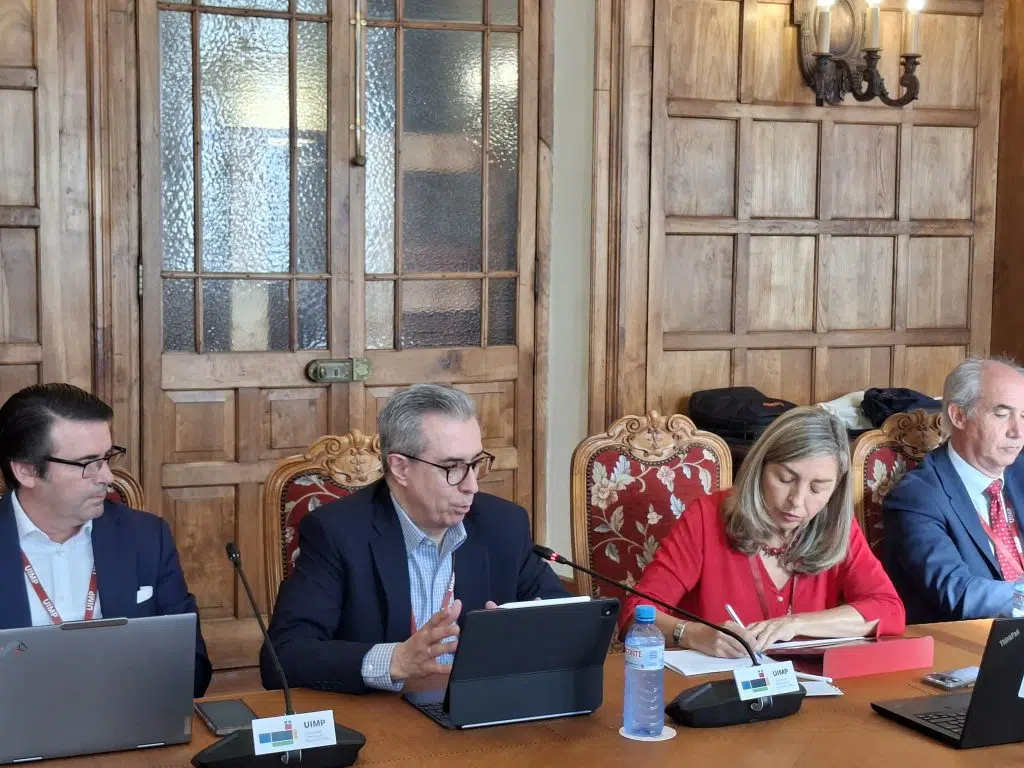
During a panel discussion on the economic outlook for Latin America, Manuel Aguilera, General Manager of Mapfre Economics, spoke about the factors that have constrained the region’s growth over the past several decades, including a chronic shortfall in savings and investment – an area where insurance is part of the solution. He also argued that insurance “helps the economy function better” through the protection it provides and by enabling families and businesses to make more efficient use of their resources.
Aguilera also highlighted the region’s significant insurance protection gap, which exceeds $315 billion. However, although this figure has increased in absolute terms, it is smaller in proportion, going from representing 2.4 times the actual market size in 2010 to 1.5 times currently.
Other matters were addressed at the Multilatinas Companies Forum, such as the opportunities of the EU-Mercosur agreement, the economic agenda in the European Union, economic security in LATAM as a necessary framework for investment, and the challenges facing Latin American cities and their development.
Across all of these issues, the speakers emphasized the need to strengthen regional cooperation and deepen economic ties both within Ibero-America and across the Atlantic, particularly at a time when other global players, such as the United States, are challenging longstanding international consensus and weakening multilateralism and international trade.

Insurance, a key factor in the response to natural disasters
The meeting also dedicated a panel to the insurance industry and natural disasters, moderated by Eva Piera, who explained that Latin America is one of the regions most exposed to these threats. According to Manuel Aguilera, the main concern is the persistent vulnerabilities stemming from the concentration of low- and very low-income populations, as well as economic assets, in large cities and tourist areas.
Aguilera explained that international experience shows the most effective protection models – and those that enable a faster recovery after disasters – combine insurance with public-private partnerships. These approaches make it possible to mobilize resources quickly for reconstruction while relieving public budgets of costs that governments have traditionally had to absorb.