
Black Friday is one of the most important shopping events of the year, but it’s also one of the periods with the highest levels of digital fraud. Before adding a product to your cart, it’s worth taking a few seconds to check that the retailer is legitimate, protect your personal information, review the purchase conditions, and ensure you have insurance coverage that protects you against online shopping incidents.
Why does fraud risk increase during Black Friday?
Every year, hundreds of millions of people take advantage of Black Friday to get a head start on shopping for the holiday season or buy discounted products. Increased online traffic and the urgency of limited-time deals create an environment that’s especially attractive to cybercriminals looking to obtain personal data, login credentials, or banking information.
Most fraud doesn’t happen on the back of sophisticated technological vulnerabilities, but because users are pressured into acting quickly. Messages promoting exclusive discounts, supposed temporary offers, or pending purchase notifications are often used to direct victims to fraudulent websites or obtain confidential information.
That’s why, in addition to finding a good deal, it’s important to take a few minutes to make sure your purchase is secure.
How can you tell If an online store is safe?
One of the first steps to take is to review the website address carefully.
Cybercriminals often create websites that mimic well-known retailers by using slight URL variations, changing a single letter, or using domains that differ from official ones.
Before entering any personal or payment information, verify that the website address really belongs to the company you intend to buy something from. It’s also advisable to access the site directly by typing the address into your browser or using the company’s official app.
Always check:
- Website name matches the official brand.
- No unusual characters, spelling mistakes, or suspicious domains.
- Site clearly displays contact information and purchasing terms and conditions.
What should you do with promotional links received via SMS or email?
One of the most common techniques used during shopping campaigns is sending fraudulent links in text messages, email, or social media.
Before you click, take a second to verify the source. If you have any doubts, it’s safer to go directly to the retailer’s official website.
It’s a good idea to avoid starting a purchase through a link received from a third party and instead use trusted, familiar channels.
How can you protect your personal and financial information?
The best way to protect personal information is to work on the basis that no legitimate company will request sensitive information via email, text message, or an unexpected phone call. This includes passwords, bank verification codes, full payment card details, or credentials for digital services.
If someone does request this information, the safest course of action is to be skeptical and verify the situation directly with the relevant organization.
Is it safe to shop using public Wi‑Fi?
While it may be convenient to use available connections in coffee shops, airports, or public spaces, making payments or entering banking information through these networks can increase security risks.
Whenever possible, use a private and trusted network, especially when conducting financial transactions or handling sensitive information. Your mobile data connection generally provides greater security than an open public Wi‑Fi network.
Key tips for safe shopping
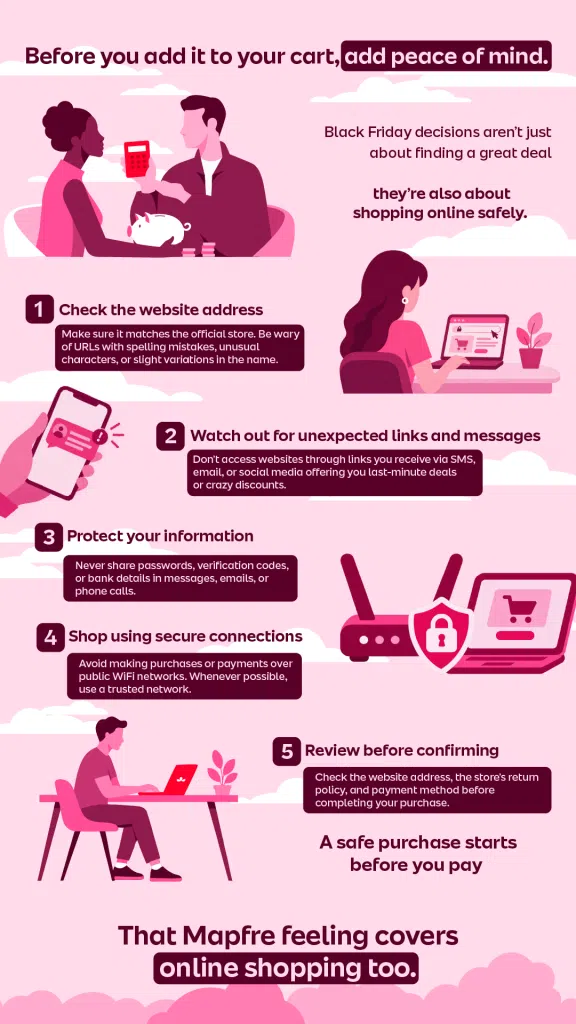
- Verify that the website address belongs to the official retailer.
- Be cautious of links received via text message, email, or social media.
- Never share passwords, verification codes, or banking information through unsecured channels.
- Avoid shopping on public Wi‑Fi networks.
- Review return policies and payment methods before completing your purchase.
In addition, many financial institutions, banks, and insurance companies offer coverage for online purchases. In the case of Mapfre, for example, some home insurance policies already include protection against fraudulent card use resulting from identity theft. It’s worthwhile reviewing the policies you have in place to ensure adequate protection.
Before adding it to your cart, add peace of mind
The best Black Friday decisions aren’t always about finding the lowest price –they’re also the ones that help you shop safely and protect your personal information.
Deals only last a few days, but digital security is something we need to think about all year.
A safe purchase starts long before you get to the checkout. And peace of mind is part of a good purchase.