A trained lawyer and a committed expert in equality, diversity, and inclusion, Marta Fernández has clear aspirations for the company she works for, Schneider Electric: to be the most inclusive company in the world. The recognitions they are receiving are clear proof that it’s succeeding.
One of the most recent (and prestigious) is the Mapfre Inclusión Responsable (MIR) Award 2025, awarded last December as part of the Sixth Forum of the Mapfre Sustainable Finance Observatory. Another example of how important it’s for Mapfre to make inclusion a reality in every professional environment. In fact, currently, more than 4% of our workforce is made up of people with disabilities, which translates to around a thousand people.
In this interview, Fernández lays down the keys to workplace inclusion and emphasizes the importance of “eliminating barriers, both visible and invisible.”
Last December, Schneider Electric won the Mapfre Inclusión Responsable (MIR) Award 2025. What does it mean for a company like yours to be recognized for such an important social issue as workplace inclusion?
It’s an immense source of pride and has a deeply symbolic value. This is not about a goal achieved, but rather the recognition of a path we have been traveling for many years, in which we place inclusion at the center of our decisions and our corporate culture.
At Schneider Electric, we often say that we aspire to be the most inclusive company in the world. And it’s not simply a slogan; it’s a commitment that runs through our global policy, our governance, and, above all, the way we make decisions day by day. For us, progress is only sustainable if it’s inclusive and recognizes that all people are unique.This award showcases the collective work of many people who, from different areas of the organization, have made it possible for the inclusion of people with disabilities to be an everyday reality and not just a mere declaration of intent.
Workplace inclusion is not just about jobs; it’s about dignity, autonomy, and belonging. I like to sum it up with a phrase that embodies our culture: “It’s not how you step that counts; it’s the footprint you leave behind.” That footprint, in this case, is the opportunity to create accessible environments and offer real ways for each person to develop their full potential. And when a company acts consistently between values and actions, the impact goes far beyond its walls.
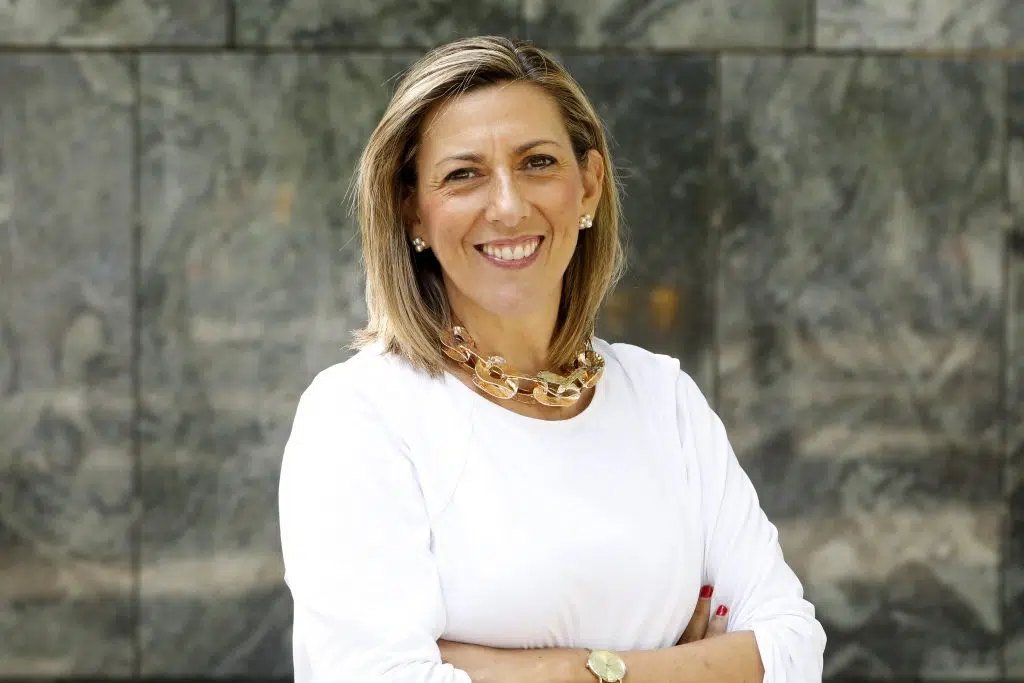
“Workplace inclusion is not just about jobs; it’s about dignity, autonomy, and belonging”
Tell us about your policy for the inclusion of people with disabilities in the workplace.
At Schneider Electric, we start from a very simple principle: every person should be able to be themselves at work, feel respected, be treated equitably, and have the security to contribute their talent. That is the starting point of all our workplace inclusion policy. To make it a reality, we work with a very clear vision: eliminate barriers, both visible and invisible. This involves ensuring accessibility in our buildings, tools, and processes, but also reviewing how we communicate, how we select talent, and how we design and deliver our solutions to the market. Inclusion does not end at the door of the office; it’s part of the entire value cycle.
Our global Diversity, Equity, and Inclusion (DEI) policy provides us with a shared framework that also adapts to local realities. But there is something that I consider especially important: responsibility is shared. It’s not a “Human Resources” issue; it’s culture and it’s leadership. We want leaders who make inclusive decisions in selection, development, promotion and, when necessary, in adapting the position.
In short, our employment inclusion policy is based on a deep conviction: diversity is not a characteristic; it’s a human and competitive strength. And when we treat it as such, people can thrive, teams become stronger, and the company makes a real impact.
What are the main challenges a company faces in becoming the most inclusive in the world?
The biggest challenge is avoiding complacency. Inclusion is not a trophy you win once; it’s a discipline that must be practiced every day. It requires leadership that is capable of self-reflection, dares to question biases, correct practices that do not work, and learn constantly. And it also demands something especially complex for global organizations like ours: consistency. Consistency between what we say and what we do in each country, in each team, and in each process.
Another major challenge is culture. Many barriers are unintentional: inertia, habits, or inherited ways of working. Breaking them down means training ourselves to embrace differences and creating spaces where people feel safe to express themselves as they truly are.Although responsibility is shared, those who lead teams must be able to create psychological and emotional safety, build diverse teams, care for well-being, and act with zero tolerance towards any behavior that goes against that culture.
What do people with disabilities contribute to a company?
Talent and a perspective that deeply enriches the teams. When we integrate different life experiences, we reduce blind spots, improve design, and lead better. Diversity forces us to act with greater intention, and that shows in our business, innovation, and internal culture.
And there’s something I always like to emphasize: a disability does not define anyone, yet many people have developed skills that any company values highly—resilience, creative problem-solving, lateral thinking, focus—because they have learned to navigate environments where adaptability is part of daily life.
That’s why I always remember an idea that has stayed with me for years: if we’re not able to see what each person contributes to our organization, then who really has the disability? That question places us in the right place: to review our biases and broaden our perspective.
Understood this way, inclusion is not “generosity”; it’s a strategic decision. The companies that understand this become more competitive, more consistent, and more human. And when people truly feel seen, they unleash their full potential. That is the real impact.
Do you think that something is changing in the business world, and that issues like inclusion are being given increasing importance?
Yes, something is changing, although still unevenly between sectors and geographies. What were once considered “social issues” or secondary topics, today are part of a company’s sustainable performance. People no longer seek just a good job; they look for environments where they are respected, cared for, and can develop their careers without giving up who they are. And the organizations that understand this are building stronger, more resilient cultures with significantly more engaged teams.
I believe that what is changing in the business world is the awareness that inclusion is not a reputational gesture, but a competitive advantage. When people can be themselves, ideas flow, innovation grows, and the company becomes a place where people not only work, but they belong. And that transforms any organization from within.
What do these kinds of priorities bring to companies?
They bring a lot. Above all, trust, one of the most valuable assets within a company. When people feel safe to be themselves—without filters, without fear, without having to fit into a mold—they work better, collaborate more, and dare to innovate. That sense of security shows in teams, in relationships, and, of course, in results.
A serious approach to diversity, equity, and inclusion isn’t just ‘the right thing to do’; it’s strategic. It helps attract talent, reduces turnover, strengthens leadership, and enhances reputation. But above all, it improves organizational performance by fostering cultures that are more mature, open, and healthy.
Moreover, well-executed inclusion makes a company more professional. It forces us to review processes, to standardize them, and to make them more transparent and fair. And when the rules are clear and work for everyone, organizations move forward with much greater consistency and strength. At its core, inclusion isn’t a ‘nice-to-have’; it’s a way to build smarter, more human, and more sustainable companies for the long term.