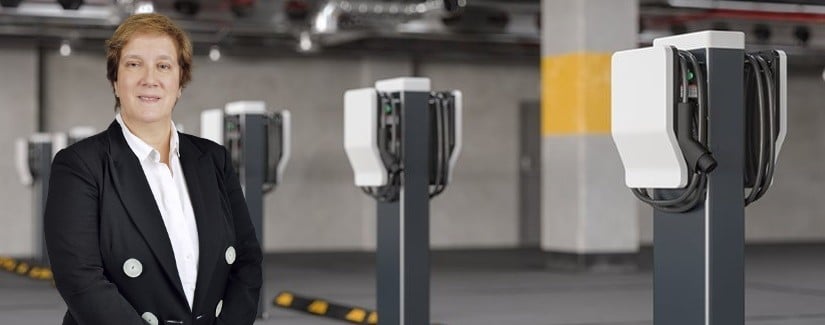

MIGUEL ÁNGEL MACÍAS
President of AGERS
All firms are fundamentally driven by the
desire to make a profit from their activity
and create added value for their
shareholders.These two goals have
traditionally been the main driving forces behind
company management. Nonetheless it is not a
straightforward linear process; threats lie in wait that
might blow things off course or even lead to sudden
interruptions of the whole activity.
Public and private organisations are quickly cottoning on to the business advantages in planning their activity properly from a risk point of view, cutting down managerial uncertainty and giving them an edge over their market colleagues.
Governmental regulations and corporate rules are playing an increasingly important role here, trying to lay down the essential internal processes to guarantee good corporate governance.
Company-wide risk management is bound to become an increasing necessity in the future, at first by enforcement and then by conviction as companies fully appreciate the advantages.This situation bodes well for sector professionals.
Those responsible for controlling internal risks will have an increasingly important role to play in all this, bringing to bear on this process their multidisciplinary skills to coordinate the strands or at least collaborate in ensuring efficiency and security in all decision-making processes.
AGERS is a non-profit making association set up
in April 1984 with the aim of promoting,
researching into and developing risk management in
Spain. Its associates include prestigious firms and
their risk managers, brokers and insurance
companies, as well as the most important consultants
and appraisal firms trading in Spain.AGERS is a
member of FERMA (Federation of European Risk
Management Associations), IFRIMA (International
Federation of Risk and. Insurance Management
Associations) and ALARYS (Latin-American
Association of Risk Managers and Insurers).
More
information at
www.agers.es
All too often at the moment their role is seen merely as «insurance management» and they are qualified as «cost centres» associated with insurance purchase. Such an outlook is by now rather witless and passé.We need to take a great leap forward, tapping into the full depth of their company knowledge to fulfil their main remit of cutting down uncertainty and heading off losses.
In many European business organisations, including in Spain, risk control areas have become more sophisticated in recent years; this has tended to reinforce them and give them the importance they deserve.This is being done by dint of alternative risk transfer strategies such as reinsurance captives and other systems of a certain sophistication, which cut down insurance- and prevention-related costs. In many cases, by shrewd management of the cash flow of premiums and claims, they even contribute value to the firm, transforming cost centres into profit centres.
«Risk managers», therefore, are selling themselves short if all they are doing is transferring risks to the insurance market.This is indeed part of their remit but it goes much further and they need to raise their sights much higher. Part of this wider picture will take in such instruments as E.R.M. (enterprise risk management), which aims to control not only pure or random risks but also the operational, strategic or even financial risks, in liaison with the auditing and control committees.
Business risk management is such an important matter that it merits across-the-board involvement by the whole organisation, a truth being borne out in all the countries we regularly do business with.
Any company that takes these tenets on board will be a forward looking enterprise prepared to deal with any type of contingency, guaranteeing its own future and its shareholders’ value.
We are in a sector that needs to fend for itself or become absorbed by other areas; it needs to carve out its own niche and make its voice heard in the highest echelons of the company. Herein lies the great development potential for risk management in Spain.
One of the main goals of AGERS (The Spanish Association of Risk Management and Insurance) is to bring these ideas home to the Spanish business community and society at large, in the conviction that there is only one way to go, and if we don’t do it voluntarily it will be enforced on us anyway.
Finally, our congratulations go to FUNDACIÓN MAPFRE and the Instituto de Ciencias del Seguro for clocking up 25 years of the review Gerencia de Riesgos y Seguros, which has been and still is the beacon publication in the Spanish speaking world and has done so much to bring risk management to a wider audience.And although it has taught us all so much, there is still some way to go, for if there is one everchanging activity in constant evolution, this is risk management.